This is a project in the Toastmasters (Pathway) Presentation Mastery. Level 4 - Write a Compelling Blog. I am starting it on March 14/2021.
I have found that I am really struggling to understand how to acomplish the various roles that Toastmasters learn and have decided to blog my experiences.
Here I will include things that I found useful and I hope you will too.
Let's begin!!
The Zoom Meeting:
Posted March 15/2021
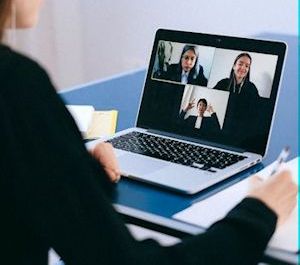
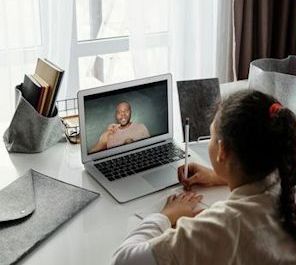
I was away from Toastmasters for several years, mostly because I wanted to travel during the winter months. However during the pandemic we stayed at home. Then one day a club I had belonged to invited me to their Zoom meeting. Haha, I was hooked again.
There are a lot of new things to learn.

If you are a guest to the meeting you will be provided with a link to the meeting, and a password.
After struggling to get into the meeting a few times I finally succumbed to letting my computer remember the sign in. That made things so simple.
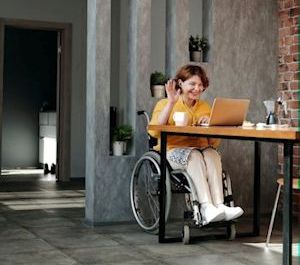
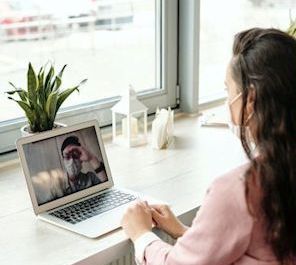
After getting to the meeting and signing in I needed to turn on my camera. I found it on the bottom left of my screen, an icon of a video camera. Turn that on, but if you need to leave for some reason turn it off. Be aware of what you look like, you can see yourself. On one YouTube video it was strongly recommended to wear pants... I wonder if it was from personal experience?
How the ambient light illuminates you might not be good, or your camera might be picking up a background you prefer not to show. The camera is best about the same height as your face. In my case I use a box to raise my laptop a few inches. Be aware of your hand movements, they are distracting, especially if you are not speaking. If your camera is way to low you might be sharing intimate pictures of the inside of your nose or like in my case if it were to high there would be reflections from my bald head :)
Once the meeting has started I found it is a good idea to have my mic off. This prevents having my background noise from being broadcast. Also someone is much more likely to talk to me because I am sitting quietly watching my computer. And every time I forget to turn that mic back on to speak, haha I'm reminded.
Body language is also different in a Zoom meeting than a boardroom meeting. (not a bored-room meeting) I was encouraged in Toastmasters to use large open body language. Well. That doesn't work so well on camera. Things that I found are hand movement needs to be a little slower and more purposeful. Be aware of moving your hands forward towards the camera. Your little hand can fill a large screen. Scary!!! So sideways is best, but not to far or they will disappear. And facial expressions count, in fact they really count!
Another thing I really benefited from was showing up early. Then I could ask questions and get help.

With Zoom I am considering staying on with Toastmasters because there might be hybrid meetings which I'll be able to attend from wherever I am.
When you are the guest:
Posted March 15/2021
Be sure to arrive a few minutes early, this will give you some time to settle in.
Being the guest is having the most important role in a Toastmasters meeting. It is through our guests that our clubs continue to grow and flourish. You can be a guest as many times as you wish.
It is with our guests that we practice how to be good hosts! That makes it a win-win - wouldn't you agree?
The very first time I was a guest, it was such an enormous deal. I wanted to learn how to speak in public, but I was terrified. Someone approached me and asked me a few things. My name and just a little about me and later on they introduced me.
You will be asked if you want to take part in table topics. You can choose not to or you can jump right in. Both are OK.
When you are a guest sitting back and enjoying the meeting is your job. Depending on the club you may be asked to introduce yourself. Tip! Don't forget to say your name! I did!
Share a sentence or two about who you are or how you'd like us to know you. Perhaps why you came. Or nothing at all.
Later in the meeting you will be asked for feedback. Just give your impression. Remember there is NO right or wrong, even as a guest you will be asked to speak a tiny bit. It all counts to making us better speakers.
So being a guest is important and you are most welcome to join us. We were all new to Toastmasters at one time and we felt a bit uncomfortable.
When you are the Sergeant at Arms:
Posted March 15, 2021
Maintain Club equipment in working order and check after every meeting to ensure adequate supplies are available.
In non-pandemic meetings, or meetings that are held in a boardroom:
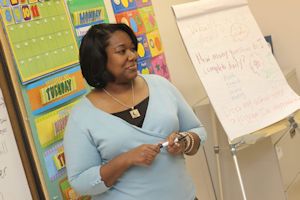 Arrive early (at least 10 min) to set up the tables and chairs, make coffee, set out the club banner, bring out the timing lights and perhaps trophies.
Make sure the lectern is in place, the lights are set up, the banner is displayed, seats are arranged properly with comment and voting slips on them.
Set out the guest book and name badges.
Also if there are guests present prepare name tags for them. If the guests arrive before the greeter, introduce yourself to them and introduce them to other club members. Never let guests be by themselves. And if applicable assign each one a host who will introduce them and answer any questions they may have.
Ensure the meeting starts on time.
Call for program changes.
Hand over control of the meeting. I believe that would be to the Toastmaster.
Sit near the door during the meeting in order to welcome any late arrivals and prevent any interruptions.
Collect voting slips and count votes (if voting applies in your Club) and present these to the Toastmaster of the meeting.
Preform any other tasks that the Toastmaster may assign.
When the meeting is over tidy up the room.
Now during the pandemic things are a lot different. However some things still apply:

Make guests feel welcome. Introduce them to other members and engage them.
Ensure the meeting starts on time - .
Call for program changes.
Hand over control of the meeting. I believe that would be to the Toastmaster.
Collect voting slips and count votes (if voting applies in your Club) and present these to the Toastmaster of the meeting.
Preform any other tasks that the Toastmaster may assign.
When you are the Table Topics Master:
Posted March 18, 2021

The purpose of table topics is to help members develop impromptu speaking abilities, and to give everyone at the meeting a chance to speak.
As table topics master you will prepare the topics or questions and conduct the session. Be creative! An online search may help you come up with ideas for table topics.
Before the meeting:
Find out what the theme is for the meeting. Prepare your topics to reflect the theme. If there is no theme the topics are open to you.
Be original, don't reuse questions.
Find out who are the Prepared Speakers, Evaluators, General Evaluator, Toastmaster and Chairman so to call on members who don't have roles first.
 Make your questions clear and easy to understand.
Here are seven tips on making a good question that I found on this page eLearning Industry.
I especially like #4. Follow the link and read the example.
1. Relevant. A good question is relevant.
2. Clear. A good question is framed in a clear, easily understandable language, without any vagueness.
 3. Concise. A good question is usually crisp and concise.
4. Purposeful.
5. Guiding But Not Leading.
6. Stimulates Thinking.
7. Single-Dimensional.
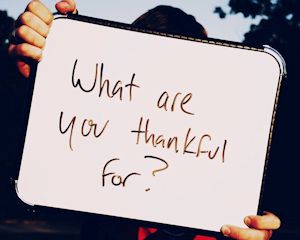 Keep your questions short, but long enough to explain what answer you are seeking.
Keep your comments short. Your job is to give others a chance to speak.
When you have the podium:
1. State the purpose of table topics.
2. Explain the time limits. In our club they are 1 minute for the green light, 1 minute and 15 seconds for the yellow light which means you are soon out of time and 1 minute and 30 seconds for the red light which means you are out of time.
3. Mention the word of the day.
4. Keep your remarks positive and brief.
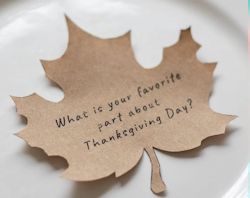 5. MAKE SURE to ask the guests if they OK doing a table topic and include them in the table topics if they agree to be part.
6. State your question and then call on a respondent. Keeps everyone awake!
7. Keep the questions fresh and original.
8. Only if time permits would you call on people on the agenda or people with roles like speaker or toastmaster to do a table topic.
9. NEVER call on the table topics evaluator.
10. Watch your time, even if you start late end on time.
After your questions you will need to:
Pick up a ballot and explain the vote in an inperson meeting. It's different on Zoom where the ballots are sent out to every person. They just appear like magic! Actually the Zoom Master sends them out.
Recap each table topic with one sentence to remind everyone of the response.
Give people time to vote.
Return control of the podium by saying "Mr./Madam Toastmaster".
The General Evaluator:
Oh Wow!
 Posted March 23/2021
What have I gotten myself into? Who am I to evaluate the many good Toastmasters in my club? I'm just a wee baby Toastmaster.
Compounding the problem, is where do I find the information that I need? I went to the Toastmasters website and downloaded the "General Evaluator Checklist", but it caused me even more grief. Some of it is bang on, but it has a section on evaluating myself, the General Evaluator. It also has me introducing the Grammarian, introducing the Timer, the Ah-Counter and the Quiz Master.This is all new to me!
These are all questions that I had.
 Well now I am really confused, time to ask some questions from those that went before me.
Yes, those are indeed my jobs. I asked some of the other people in the club and received this very useful link to "The General Evaluator" . and this "General Evaluator Checklist" which is downloadable in PDF format.
I would like to share this quote that I found on the Toastmasters website. It resonates with me so well. Using it as my guide it leaves me pondering how can I encourage others to be their best. To grow and improve.
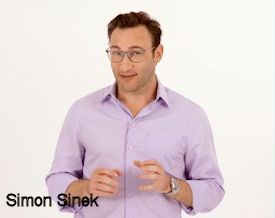 "The goal is not to be perfect by the end. The goal is to be better tomorrow." by Simon Sinek.
A quick google search finds that quote all over the internet.
In my opinion, it is important to remember that the meaning of your/my communication is in the response we get. In view of that, I have decided when giving somone an evaluation it would include how their words affected me. It is about letting the evaluated person know what those words meant to me.
This is a little crazy, but once I heard some young boys, perhaps ten or so, being really big men. They called one another rather bad names and that made them feel even more important. Today I would expect that those exact same words would be ofensive. Those bad words had a different meaning back then.
So I think that good feedback lets me communicate to the speaker what my experience is so their speech/speaking could be improved. Perhaps now I will do a good job as General Evaluator!

Updated March 28/2021
It was a real learning curve.
The information that I found had me introducing the Timer, Grammarian, Ah-Counter and the Quiz Master and asking for their reports.
Well be prepared because the Toastmaster is in control of the meeting and today he introduced the evaluation team and asked for their reports. That left me slightly unprepared. But that is what Toastmasters is all about, learning to be flexible in the moment and being able to talk on our feet.
I am sure that I'm my worst critic. Feedback would always be welcome. I remembered Simon Sinek's quote "The goal is not to be perfect by the end. The goal is to be better tomorrow."
Today was my first General Evaluator role. I think it was a success. I am still alive (didn't die) and I now have some experience adapting my role :)
The ssl Certificate:
Posted March 25/2021

Because this blog is about building web traffic, I needed to update my website.
I didn't have that "S" on the end of my http. As a result my website suffered a not secure warning. That was meant to let people know not to put personal information on my site. Well there isn't a way that you could do that, because I don't accept any personal information. Not your credit card, not your name and you can't even let me know if you happen to be in a good mood.
I started with Shaw where my blog was hosted. Yes they could do it, but it would cost me a whole bunch. Then I checked further. GoDaddy had a better price on a 3 year promotion. After the three years it would become the most expensive for similar value. Out of the hosting companies that I looked at GoDaddy would become the most expensive .
I found a lot of reviews about hosting companies, but in the end each review was wanting a click through. That is where I can click on a link to a hosting company. Each time that happens they receive a small income. However that can amount to a lot over time. In conclusion I felt the reviews were bogus and only meant to get click through earnings, a bit like "a used shoe sales man". Annoying and not helpful.
Here is an example of a click through to best sellers on Amazon. If you click on that link and buy something I will earn a little from Amazon.
I decided to go ahead with Shaw. I phoned them and guess what I heard "Due to unusually large volumes ..." well where did I hear that before? I waited .. and waited .... and waited ........ Thank God for my speaker phone. 40 minutes later I got someone on the line and he couldn't help me? Shaw offers help 24/7 but I found out that was something like a question bank and perhaps a forum. Wow I thought things really went down hill here.
In the end I went with HostGator. Time will tell, but so far I've contacted them 4 times today with chat, all were pretty good. Three of those were after I paid 36 months, so it wasn't like they were just trying to get my business. Time will tell.
Soon I will have an https website. It will have the coveted "S" and be secure!

Posted March 25/2021
Well I think it is only a matter of time now. Although I moved over my website to HostGator and got the DNS pointed it will be at least 24hr. before it is "populated". This is an experience and indeed it has a lot to do with my Toastmasters project. It should ultimately improve my SEO (search engine optimization) and the traffic. It will also remove the warning about the website being unsafe. So perhaps a couple of days more.
I will be adding to this section as my website moves to https. That may be a few days.
Posted March 26/2021
It is rather complicated moving a website. Today HostGator added security to my site.
Happy days - I thought.
Well when they changed my address from http to https it disrupted my caching regime. I cannot allow pages to be cached by the browsers that visit them because I am adding to my blog on a regular interval.
So I have to figure it out again and it seems that there isn't anyone who knows how to work with those files.
"Just Google it" I was told. It actually worked, I think.
Posted March 28/2021
When working on the code of the blog, perhaps it would have been way easier to just use a plugin like WordPress. I chose not to.
I have coded my whole website by hand and I don't want to change the way I am doing it. Now I am coming to the beginning of a new phase of learning. The social buttons. All I can say is making the buttons is the easy part. Figuring out how to link everything is a real steep learning curve.
The unfolding saga of my blog will continue.
The Prepared Speech:
Posted March 29/2021
Write your own introduction and give it to the Toastmaster or if you are elsewhere give it to the person introducing you. This is important because it will let your audience know why they should listen to you. Use that intro as the very first part of your speech. This should be short but get your audience interested in what you have to say. It is a good way to get their interested peaked.
Be prepared to do your own intro. Sometimes the intro that you expect is not the same as reality. So have a sentence or two to introduce your own speech.
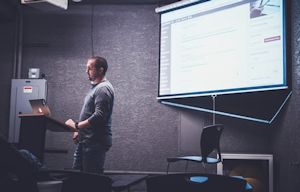 If you are doing a presentation in person, arrive early. Check out the room layout, make sure you understand how to work the visual props like slides or adding videos. Become familiar with the stage or podium. This will help to ready you for any problems that may affect your speech.
All the above relates to a zoom or on line meeting as well ... kinda. In my case I came early and asked how to show slides on my Zoom meeting. In my opinion if the slides are provoking it might be a good idea to have a blank slide or one with an idea typed on it with just a few words... to perhaps take the audience onto the next portion of your speech. Zoom meetings are new to me and there is so much to learn. Your body language is different and yet the same. Your hands and expressions can easily leave the screen. This could be confusing.
A small detail that I learned about body language is that an open hand palm facing up is open inviting body language, but a finger pointing at the audience can be putting a barrier between you and your audience.
I watched an excellent video on speaking titled "The magical science of storytelling" by David JP Phillips on TEDxStockholm. This in my opinion is the best of the best. It is so worth watching. David has amazing body language. His rhythm is excellent and he gives many good points to take your speaking up a level or two. Tip! Do a google search for David JP Phillips.
As a result I will include some stories in a speech that I am working on now. It is a serious grim matter and I don't want to lose my audience. I really want them to be on my side.
 Also this was and is huge for me. My audience is a mirror to me. Yes, they reflect my projections with 20-20 clarity. If I smile or laugh it brings them in that direction. If I am stern or aggressive the result is mirrored. If I talk about a serious subject, as in the speech I am preparing now, I will need to mix in humor and inspiration. This will be a journey. A very long journey! I will be looking forward to the feedback. To how my audience felt as a result of my talk.
When you are the speaker, an important thing to do is listen to the other speakers and give them good feed back. It goes in a full circle, and you might find something that you want to adopt.
Practice, practice, practice goes without saying. It seems that speaking without notes is the goal, but I am going to propose a different argument. Speaking with notes is ok. I have missed parts of speeches because I tried to avoid notes and lost a lot of impact. In the end I will continue using notes because I feel not missing parts of a speech is more important than appearing that I know it all.
Prior to speaking talk with your evaluator and let them know about any particular thing that you might want feedback on.
The Timer:
 Posted April 1/2021
Timing is a really difficult role for me. It takes a huge amount of multi tasking. I often get involved in listening to someone's speech or table topic and forget to watch the time.
The Timer is an important role, it keeps us on our toes. Toastmasters learn to express an idea in a set amount of time. The Timer's duty is to time each segment of the meeting. The Timer will be called upon by the Toastmaster to explain the timing rules. Here we learn communicating instructions - something we do everyday.
The Timekeeper is responsible for timing items in the meeting, and signaling at appropriate points. (The role is also known as The Timer.)
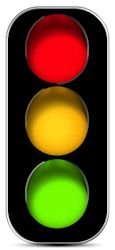 On Zoom some of this is different. We don't need to ready the equipment nor put it away after the meeting. Also when I am speaking, I tend to watch the Timer on my screen which affects my eye contact. There are wallpapers that are meant to be used as backgrounds. I think the traffic light one is really cool.
But even on a Zoom meeting most these tasks still apply. I found most of the following on our speak easy role information.
1. Prior to the meeting:
Study the Agenda and raise any queries with the Toastmaster of the meeting. In particular, note the times of the prepared speeches. Prepare an explanation of your role. Make it interesting - for example, google 'time' for a fascinating fact.
2. Upon arrival to the meeting:
Especially for me, I will need to figure out how to get those timer backgrounds and learn how to use them during Zoom meetings. For boardroom meetings, get the timing equipment from the Sergeant at Arms. Ensure you understand how to operate the stopwatch and signal device, and test that they work. Sit where the signal device can be seen easily by those at the lectern.
3. During the meeting:
When introduced, give an explanation of your role and demonstrate the signal device. Throughout the meeting, signal each program participant as required.
4. Record each participant's name and time used:
 When called to report by the Toastmaster, stand by your chair and announce the participant's name and the time taken. When reporting on the time of each Table Topic, remind the audience in a few words of the subject. This is particularly useful if there is a vote for Best Topics Speaker.
5. After the meeting:
Return the stopwatch and timing signal device to the Sergeant at Arms. Give the completed Timer's report to the Secretary for recording speech times.
The Table Topics Speaker:
Posted April 5/2021
Table Topics is a fun way to gain practice speaking on your feet. I think it is a good idea to check what the theme is for the day and prep a few short ideas just incase you are asked to speak.
For me the idea of thinking about what I might talk about seems to really help me tackle Table Topics. Very seldom do I actually use something that I preplanned, but it gets the juices flowing. It helps me to avoid panicking.
Then if the Table Topic is a real stumper, buy time by repeating the question or topic. Perhaps rearrange the subject into a how or why question. You can even bridge it into a completely different direction. Another way could be changing a "why" question into a "why not" answer.
 You don't have to shop. Develop your first idea. Just get an idea and "build baby build" :) Start by using your first idea and as you talk about it you will have time to come up with the next idea and so on.
If possible take a stand right from the start. That would be answering a why or why not to the question you were asked.
You don't have to shop. Develop your first idea. Just get an idea and "build baby build" :) Start by using your first idea and as you talk about it you will have time to come up with the next idea and so on.
If possible take a stand right from the start. That would be answering a why or why not to the question you were asked.
Use the rule of three. Use three main points.For example, the first point is followed by a supporting second point and then the third point can continue OR the third point can do a 180 and result in humor.
Toastmasters mentions the British writer Rudyard Kipling's "six honest serving men" (what, why, when, how, where and who) as a means of finding ideas for your answer.
 When you have finished developing your main idea sum it up.
Ideally like any speech, it should have an opening, a body and a conclusion. As you finish, sum up what you just said and give it back to the Table Topic Master.
When you have finished developing your main idea sum it up.
Ideally like any speech, it should have an opening, a body and a conclusion. As you finish, sum up what you just said and give it back to the Table Topic Master.
Be adventurous. I was once asked about gardening. It was mid March and there was still snow on the ground. I think the Table Topics Master had the idea of starting plants indoors or perhaps planning a garden, but I just went with the question. First I had to shovel the snow, then I grew snow peas and iceberg lettuce. It was hilarious.
My thoughts are that Table Topics are a fun way to develop talking on your feet skills. So when your boss asks you a question, treat it with caution, not humor and you will be Ok :)
 In our club the times are 1:00 - 1:15 - 1:30 minutes, when the yellow light comes on it is time to wrap up.
Learn From Videos:
Posted April 7/2021

To better my speaking I have watched many videos. I watched them from a perspective of a Toastmaster. More specifically a Speech Evaluator. They are very interesting, and you can pause and rewind them.
Some of the speakers that I watched from the perspective of Speech Evaluator were by Martin Luther King, Bill Clinton and Barack Obama. To make a public disclaimer, I am neither a Republican nor a Democrat, but a Canadian.
It is not the political point of view, but it is the marvellous way in which these great speakers crafted their speeches that is so amazing. So whether you agree or disagree with a speaker, there is always something to be learned. Give a man his due!
There is an endless flow of videos analyzing speeches today.
 Many gems and diamonds are waiting to be found amongst these great speeches and the way they were presented. I realize exactly how important the delivery of a speech is. Words are 7%, voice tone 38% and body language 55%. Words are only 5-7% of the message.
Many many years ago, just as we were discussing body language in a real estate sales training class I was taking, I happened to get into an elevator with a man. He didn't say a word, but I still remember him. He was pissed. He was going to do something about it and he had full intentions of succeeding. Remember - he didn't say a word and yet I remember him and his message.
It is not the words, it is how they are delivered. The man in the elevator didn't say anything and yet I remember what he had to "say". Ok this just hit me again, "It is not the words, it is how they are delivered"!
Hmmm. I had decided to memorise my speeches, but perhaps I am making a mistake. The jury is out on this one. Seeing that body language is 93-95% of communication and has been encoded genetically long before any spoken language existed, it is as primal as life itself.
I am working on a speech which addresses pollution, a topic that is close to my heart, but I want to address it in a different and unique way. It is the most difficult speech that I have ever worked on by an order of magnitude ...... and it is the most important one to me. Considering my speech and how distasteful the subject is, it is so encouraging to watch as great leaders take on distasteful subjects like inequality, or political injustice and have people come to their viewpoint. To have their audience reach a tipping point.
 "A speech" isn't a mysterious thing but just another way of saying "conversation". Never give a speech to, but have a conversation with your audience. It's about keeping it from the heart.
Speak to all the senses: visual, auditory, feeling touching, hearing, smelling and even tasting. I learned that you can get someone to a new level of understanding by overlapping senses. A brief example might be as follows. I'll try bring you through various types of "visulizations" to end with taste or prehaps smell.
In step form:
1. See an apple tree in your minds eye.
2. Now see the apples on it. What color are they?
3. Imagine touching an apple. Can you feel how smooth it is? Is it warm or cold?
4. Now imagine biting into it. What does it taste and smell like?
That is a very simplified way of explaining it. The more senses I can invoke, the more people will understand and indentify with what I am saying.
Ditching The Notes:
Posted April 13/2021
On watching some of the worlds greatest speakers, speakers like Martin Luther King, Bill Clinton and Barack Obama, I absolutely realized that I needed to learn how to memorize my speeches. Here is what I learned and what I intend to do:
1. Write my speech, make an outline. Write my speech again this time, word for word, as I would like to present it. Then make a new outline in point form to speak from or to practice my speech from.
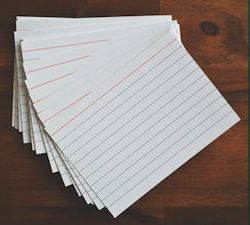 2. I will rehearse my speech, looking for things that I like and things that I don't. Make changes. Time it to make sure it falls within the allotted time. Even though I like to rely on notes, I seldom present my speech the same way it is written. Looking down to read notes exudes a body language that is not positive. Instead it is a bit like "remember that kid in school that was asked to the front of the class and was in trouble" where did he look?
3. Memorize the speech structure in the following way. First memorize the opening statements and the conclusion, word for word. Then memorize the main points in the body. This might be done in point form. Here groups of three work for me. Three is a magical number. Three is an easy number of things to remember. Keep doing this in hierarchical form until you have everything that is important in your speech noted.
1. Opening
   A. Points about
      a. Points about
      b. Points about
2. The body
   A. Several main points in the body
      a. Each with a few sub-points
   B. The next main item
      a. More sub-points
3. The conclusion
   A. This might include a call to action
The idea is to remember things hierarchically. Keep points in small groups of 3 or less.
This is all so crazy and it is not the way I remember things. It will be new to me. This brings to mind a quote from the Dr. Phil show "How's it working so far?"
I hope to be able to report success on my next speech. I intend to memorize my next speech in this manner. This speech will be a humorous one. I am planning on doing a combination of stories. This will be easy, because I already know the stories!
Updating this section, I just gave a 3 min speech without notes and WOW! this really works :) Next time I will be trying a 5-7 minute speech from my Pathway! This is all so exciting! I am changing doubt to do!

The Hats of Change:
Posted April 16/2021
 I watched a very good video on youtube about BAD presentations, Broken And Dysfunctional presentations by Laura Penn. She is very good! Laura addresses many very important mannerisms of speaking. She gets right to the point in a super engaging style. I found I could use her evaluations, of how others presented unengaging speeches, to make my presentations better and more compelling.
Laura does many of the things that great speakers like Martin Luther King, Bill Clinton and Barack Obama do. Laura tells stories, she gives examples, but in the end she recommends putting on the "Hat of an Entertainer". Imagine yourself as an entertainer. Just by "wearing it" you are encouraged to learn effective public speaking.
Let's face it, when we are listening to someone speaking we want to be entertained. We want to be kept at the edge of our seats.
 Quoting Laura Penn "Performance is what makes your presentation interesting, so that people pay attention". She claims speaking is entertaining; I agree. According to Laura, there are four important elements to public speaking. First is appearance including what you wear to how you walk onto the stage. This brings to mind President Trump. He'd walk onto the stage as if he owned the place. Then there is voice. She calls voice an instrument and it is your job to play it, creating a speech - a tune - that your audience wants to listen to. Third there is body language. This has been around long before we evolved language. Animals and birds do it and are aware of body language. Body language has been instrumental to our survival from primordial times. Finally speak to your audience, to whom they really are. Speak directly from your heart as you believe it.
Here is what really makes sense to me. I had a t-shirt with "Bad Command" written on it and in some way this shirt affected me. I tossed the shirt and the change went with it. In the same way when Laura suggests "imagine wearing a hat" to do your presentation, I believe it will make a tremendous difference. Imagine wearing the hat of an entertainer, a well informed entertainer.
Laura claims that by imagining wearing the hat of an entertainer, it will help you become a better speaker. I agree! Don't underestimate the incredible power of your imagination and the way you view yourself. Here is a link to Laura Penn's TEDx Talks and another talk by Sala Tiatia and his work with children and how he helped them change the hats they wore.

The Speech Evaluation:
Posted April 19/2021

Evaluations are like sign posts on our road to better speaking. Good evaluations guide us and keep us safe, they give us strength on our journey.
Looking back, I am embarrassed at some of my evaluations. Why? because today I understand speaking a bit better. I remember evaluating one lady's speech, she did a really good job. I gave her advice about her body language. It wasn't good advice and I was mostly repeating what I have been told about myself at Toastmasters. Sadly this was not good advice. I now believe a good evaluation ALWAYS builds the speaker's ability to do a better speech. It builds on a person's abilities and gives them courage to explore more of their inert abilities. We are all born with the ability to communicate. The big thing we need is the confidence to do so and a safe haven.
I have learned that we are all doing the best we can. Perhaps "wow you did great here" instead of a "you failed because of". I like to give feedback on how I perceived the speech and how it left me feeling. Sometimes, especially with zoom meetings, it is difficult to see my audiences reactions. There is a loss of eye contact when I look at my monitor to see my audience's reactions. I find it useful to have those relayed to me.
I am not suggesting giving an award to the person who didn't earn it, but "hey you did well here or there" just might give someone the strength to continue. Public speaking is a mountain of fear to climb. Most people are nervous and apprehensive to speak. Help them get stronger!
Don't just say "great speech" but give details like when you started you got my attention with that statement, it made me ask where is he going with this. It made me curious.
Before the speech, ask the speaker which particular skills they would like you to pay attention to. As evaluator you become part of the speakers team helping them to improve. Do so gently and honestly. Perhaps let the speaker know how you perceived the presentation. Make sure to point out strengths so that they can be built on.

Evaluating:
Posted May 4/2021
Who benefits from an evaluation? Everyone!
Of course the person being evaluated is the prime beneficiary, but a good evaluation benefits the whole club. Some of the best tips I learned came from someone else's evaluation.
Some of the key ideas that made a difference to me were regarding body language and vocal variety.
I realized that my hand movements needed to be meaningful, that started me thinking about body language. I watched how others did their gestures and have come to realize that I definitely flail my hands too often. There has to be a reason for hand movement, it has to be an integral part of the message.
I also listened to other's speeches and then the evaluations regarding vocal variety. I had a lot of work to do. It was one thing to be evaluated and hear that I needed more vocal variety and a completely different thing to hear someone else's speech evaluated after hearing their speech. To me this finally brought it home.
I've mentioned this before, reading notes can result in displaying really bad body language, it has you looking down. Looking down as body language could mean the speaker feels insecure, unconfident, or is demonstrating submissiveness. However in many Eastern cultures like in Japan or China, it is taught that making direct eye contact - especially with higher-ups - is rude, so looking down is quite normal.
The following web page has many examples of eye direction and what it might mean. Some examples like looking down are quite universal, but others are not. Be aware of looking down to read notes. Find out more here: Science of People.
Remember when doing an evaluation it is for everyone's benefit.
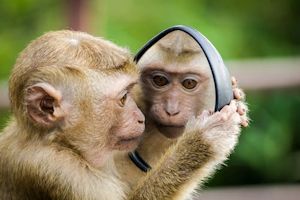
In my humble opinion when there is an evaluation that points out the good points, it not only gives the person's speech some well earned praise, BUT, it also brings to attention things that everyone else may do or adopt. A little like "monkey see monkey do". Reflecting on my own journey to better speaking, almost all of the things that I learned were demonstrated by others. Then I either liked the points myself and adopted them, or when something was pointed out as being good, my attention was brought to it and I examined the idea.